
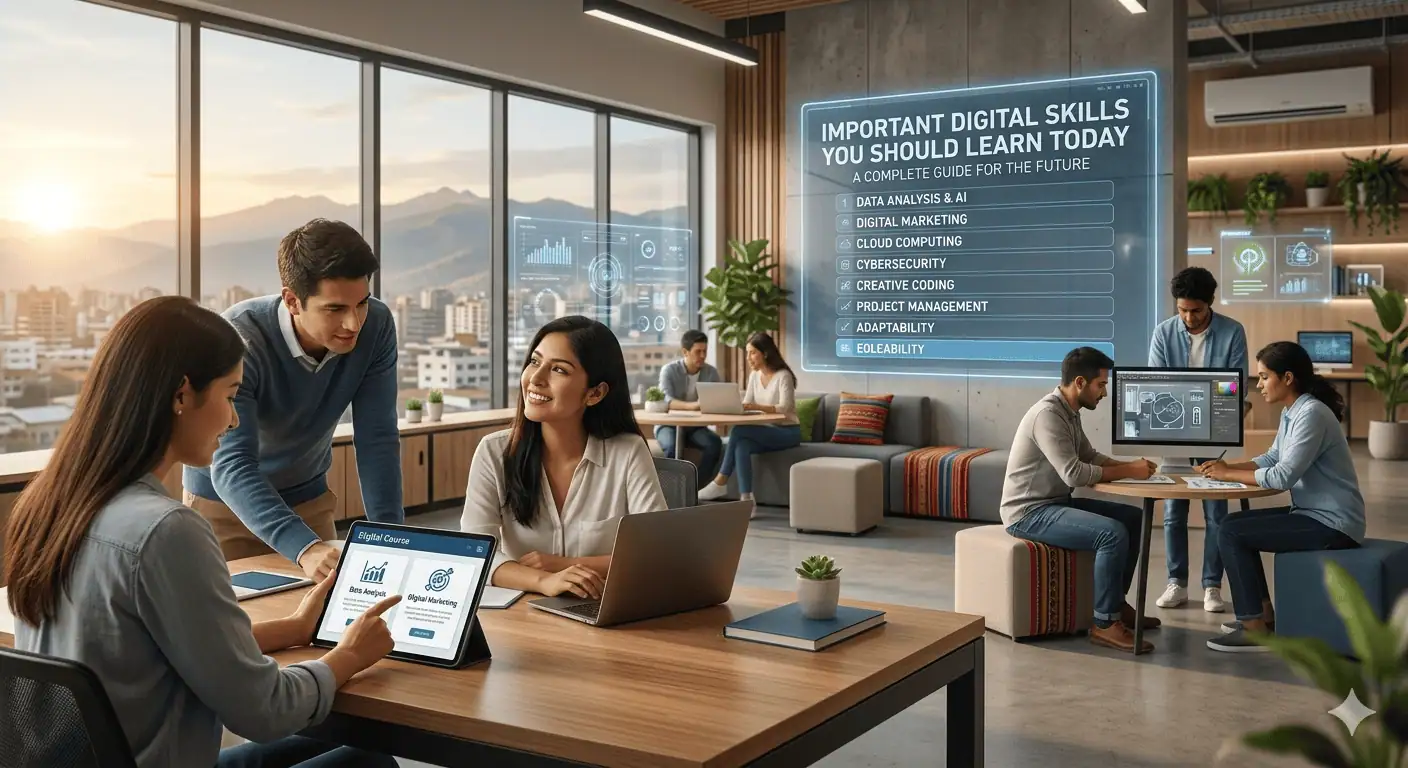
Por qué las habilidades digitales importan más que nunca 🌎
El mundo está cambiando más rápido que nunca. La tecnología ha transformado la forma en que las personas se comunican, trabajan, estudian y resuelven problemas cotidianos. Desde la inteligencia artificial y la automatización hasta las plataformas en línea y los negocios digitales, la tecnología se ha convertido en una parte fundamental de la vida moderna.
En el pasado, los conocimientos básicos de informática eran suficientes para muchas actividades profesionales. Hoy en día, las empresas, las organizaciones y los particulares necesitan un abanico más amplio de habilidades digitales para adaptarse a un entorno en constante evolución.
Las habilidades digitales ya no son exclusivas de programadores o expertos en tecnología. Son útiles para estudiantes, emprendedores, empleados, creadores y profesionales de prácticamente todos los sectores.
Saber utilizar las herramientas digitales de forma eficaz puede ayudar a las personas a ser más productivas, organizar mejor su trabajo, comunicarse de manera más eficiente y comprender las nuevas oportunidades que ofrece la tecnología.
La buena noticia es que las habilidades digitales se pueden aprender paso a paso. Muchas personas comienzan con conocimientos básicos y gradualmente desarrollan habilidades más avanzadas a través de cursos en línea, práctica y aprendizaje continuo.
Esta guía completa explica las habilidades digitales más importantes que deberías considerar aprender hoy en día, por qué son valiosas, sus beneficios y cómo puedes empezar a desarrollarlas.
¿Qué son las habilidades digitales? 💻
Las habilidades digitales son los conocimientos y las capacidades necesarios para utilizar la tecnología de forma eficaz, segura y productiva.
Incluyen habilidades básicas como la gestión de archivos y el uso de plataformas en línea, así como habilidades avanzadas como la programación, el análisis de datos, la inteligencia artificial y el marketing digital.
Una persona con sólidas habilidades digitales puede:
- Utiliza la tecnología para resolver problemas.
- Aprende nuevas herramientas más rápido.
- Trabajar de forma más eficiente.
- Proteja su información personal.
- Adaptarse a los cambios tecnológicos.
Las habilidades digitales se están volviendo esenciales porque muchas actividades cotidianas dependen ahora de sistemas digitales.
Ya sea que alguien trabaje en el mundo empresarial, educativo, sanitario o en las industrias creativas, el conocimiento de la tecnología puede proporcionar ventajas valiosas.
Inteligencia Artificial: Una Habilidad Clave para el Futuro 🤖
La inteligencia artificial es uno de los sectores tecnológicos de más rápido crecimiento. Las herramientas de IA ya se utilizan en la educación, las empresas, la investigación y en aplicaciones cotidianas.
Aprender sobre inteligencia artificial no significa que todo el mundo deba convertirse en ingeniero de IA. Comprender cómo funcionan estas herramientas y cómo utilizarlas de forma responsable es cada vez más importante.
Entre las habilidades importantes relacionadas con la IA se incluyen:
- Comprender los conceptos básicos de la IA.
- Utilizando herramientas basadas en inteligencia artificial.
- Crear instrucciones y recordatorios eficaces.
- Automatizar tareas repetitivas.
- Evaluación de la información generada por IA.
La inteligencia artificial puede ayudar a las personas a ahorrar tiempo, organizar la información y mejorar la productividad.
Sin embargo, también es importante comprender que la IA funciona mejor como herramienta de apoyo. La creatividad humana, la toma de decisiones y el pensamiento crítico siguen siendo esenciales.
Alfabetización digital y gestión de la tecnología 📱
La alfabetización digital es uno de los pilares de la tecnología moderna.
Se refiere a la capacidad de utilizar correctamente los dispositivos digitales, las aplicaciones y los servicios en línea.
Algunas habilidades importantes de alfabetización digital incluyen:
- Gestión de documentos digitales.
- Utilizando almacenamiento en la nube.
- Organizar archivos.
- Comprender las plataformas en línea.
- Resolver problemas tecnológicos básicos.
Estas habilidades pueden parecer sencillas, pero son necesarias en casi cualquier entorno moderno.
Una persona que sabe manejar las herramientas digitales puede completar las tareas más rápido y comunicarse de manera más eficaz.
La alfabetización digital también ayuda a las personas a sentirse más seguras al aprender nuevas tecnologías.
Programación y pensamiento computacional 👨💻
La programación es una de las habilidades digitales más valiosas porque el software es la base de muchas de las herramientas que la gente usa a diario.
Aprender a programar ayuda a desarrollar el pensamiento lógico y la capacidad de resolución de problemas.
Las habilidades de programación pueden ser útiles para:
- Creación de sitios web.
- Desarrollo de aplicaciones.
- Automatizar tareas.
- Creación de proyectos digitales.
- Comprender cómo funciona la tecnología.
Entre los lenguajes de programación populares y fáciles de usar para principiantes se incluyen:
- Pitón.
- JavaScript.
- HTML.
- CSS.
- SQL.
Incluso los conocimientos básicos de programación pueden ayudar a las personas a comprender mejor la tecnología y a crear soluciones prácticas.
El objetivo no siempre es convertirse en un desarrollador profesional. A veces, conocer los fundamentos es suficiente para mejorar la eficiencia y la creatividad.
Análisis de datos: Transformando la información en conocimiento 📊
Los datos se han convertido en uno de los recursos más valiosos del mundo digital.
Cada día se crean millones de datos a través de sitios web, aplicaciones, empresas e interacciones en línea.
El análisis de datos ayuda a las personas a comprender la información y a tomar mejores decisiones.
Entre las habilidades importantes relacionadas con los datos se incluyen:
- Organizar la información.
- Usando hojas de cálculo.
- Creación de gráficos.
- Comprender las estadísticas básicas.
- Encontrar patrones.
Las empresas utilizan el análisis de datos para mejorar sus productos, comprender a sus clientes y planificar estrategias.
Los profesionales de muchos sectores también utilizan sus habilidades en el análisis de datos para mejorar su trabajo y resolver problemas.
Ciberseguridad y seguridad en línea 🔐
A medida que avanza la tecnología, proteger la información digital se vuelve más importante.
La ciberseguridad se centra en mantener seguros los sistemas, las cuentas y los datos personales.
Los conocimientos básicos de ciberseguridad incluyen:
- Crear contraseñas seguras.
- Cómo reconocer las estafas en línea.
- Protección de la información personal.
- Comprender la configuración de privacidad.
- Adoptar hábitos digitales seguros.
Estas habilidades son útiles para todos porque casi todas las personas interactúan con plataformas digitales.
Aprender sobre ciberseguridad ayuda a reducir los riesgos y promueve un uso más seguro de la tecnología.
Marketing digital y comunicación online 📢
Internet ha cambiado la forma en que las empresas se comunican con su público.
Las habilidades de marketing digital ayudan a las personas a comprender cómo funciona internet.
Las áreas importantes incluyen:
- Optimización para motores de búsqueda
- Gestión de redes sociales.
- Creación de contenido.
- Publicidad en línea.
- Análisis de la audiencia.
Estas habilidades son valiosas para empresas, emprendedores e individuos que desean construir una presencia en línea.
El marketing digital no se trata solo de vender productos. También se trata de comprender a las personas, crear contenido útil y comunicarse de manera efectiva.
Creación de contenido y creatividad digital ✨
El contenido está presente en todas partes en internet. Los sitios web, las plataformas de redes sociales, los recursos educativos y las comunidades digitales dependen de contenido de calidad.
Las habilidades para la creación de contenido incluyen:
- Escribir para internet.
- Creación de vídeos.
- Edición de imágenes.
- Diseño de gráficos sencillos.
- Narración de historias.
Un creador digital exitoso necesita tanto creatividad como conocimientos técnicos.
Aprender estas habilidades puede ayudar a las personas a compartir ideas, educar a otros o desarrollar proyectos personales.
Trabajo remoto y colaboración digital 🌐
Los lugares de trabajo modernos utilizan cada vez más lo digital.
El trabajo remoto requiere más que una simple conexión a internet. Requiere organización y habilidades de colaboración digital.
Entre las habilidades importantes se incluyen:
- Gestionar reuniones en línea.
- Trabajar con documentos digitales.
- Utilización de herramientas de gestión de proyectos.
- Comunicación profesional en línea.
Estas habilidades ayudan a los equipos a trabajar juntos incluso cuando se encuentran en lugares diferentes.
Requisitos para aprender habilidades digitales ✅
Cualquiera puede empezar a aprender habilidades digitales. No es necesario tener conocimientos avanzados desde el principio.
Algunos requisitos útiles incluyen:
Un dispositivo digital
Un ordenador, una tableta o un teléfono inteligente te permiten practicar y explorar diferentes herramientas.
Acceso a Internet
El acceso a Internet proporciona recursos educativos, tutoriales, comunidades y cursos en línea.
Curiosidad y paciencia
La tecnología cambia constantemente, por lo que el aprendizaje continuo es importante.
Hora de practicar
El aprendizaje requiere constancia. Incluso un poco de práctica diaria puede generar progreso.
Cómo solicitar plaza y empezar a aprender paso a paso 📚
Paso 1: Elige una habilidad
Empieza por seleccionar un área que se ajuste a tus intereses.
Ejemplos:
- Inteligencia artificial.
- Programación.
- Análisis de datos.
- Marketing digital.
- Ciberseguridad.
Encuentra recursos de aprendizaje
Busca cursos, tutoriales, libros y plataformas educativas para principiantes.
Empieza por los conceptos básicos antes de pasar a temas avanzados.
Practica con proyectos reales
La práctica es una de las mejores maneras de mejorar.
Ejemplos:
- Crea un sitio web sencillo.
- Crear contenido digital.
- Analizar la información.
- Automatiza tareas pequeñas.
Crea un portafolio personal
Un portafolio te permite organizar tus proyectos y mostrar lo que has aprendido.
Puede incluir:
- Proyectos digitales.
- Artículos.
- Diseños.
- Ejercicios de programación.
Continuar mejorando
La tecnología cambia constantemente, por lo que mantener tus conocimientos actualizados es fundamental.
Consejos importantes para mejorar tus habilidades digitales 💡
- Aprende una habilidad a la vez.
- Practica con regularidad.
- Utilice fuentes de aprendizaje fiables.
- Mantén la curiosidad por las nuevas tecnologías.
- Proteja su información personal.
- Combina la tecnología con la creatividad y el pensamiento crítico.
Las habilidades digitales se han convertido en herramientas esenciales para el mundo moderno. Tecnologías como la inteligencia artificial, el análisis de datos, la ciberseguridad y la digitalización están cambiando la forma en que las personas viven y trabajan.
Adquirir estas habilidades no sucede de la noche a la mañana, pero con dedicación y práctica constante, cualquiera puede mejorar sus conocimientos tecnológicos.
El futuro seguirá trayendo nuevos retos y oportunidades digitales. Desarrollar habilidades digitales importantes hoy puede ayudar a las personas a estar mejor preparadas, ser más adaptables y tener más confianza en un mundo cada vez más conectado. 🚀